

When Richmond Yiddish Week concluded in January, co-founder Sam Shokin was already hearing calls for more.
The inaugural festival, held January 10–16, drew more than 200 individual attendees, with repeat visits bringing cumulative attendance above 400. Afterward, people approached Shokin with ideas for additional concerts and cultural programs.
The response suggested that a weeklong festival might be the beginning of something larger.
“So many people have been approaching me with ideas for programs and opportunities for concerts outside of the festival itself,” Shokin said.

That interest gave rise to Yiddish RVA, an initiative intended to make Yiddish language, music and culture a more consistent presence in Richmond.
Shokin envisions concerts, educational opportunities and partnerships with local institutions, supported by fundraising and a newsletter highlighting Yiddish-related events throughout the region. Some programs will be organized by Yiddish RVA; others will be independently produced events she hopes to help promote.
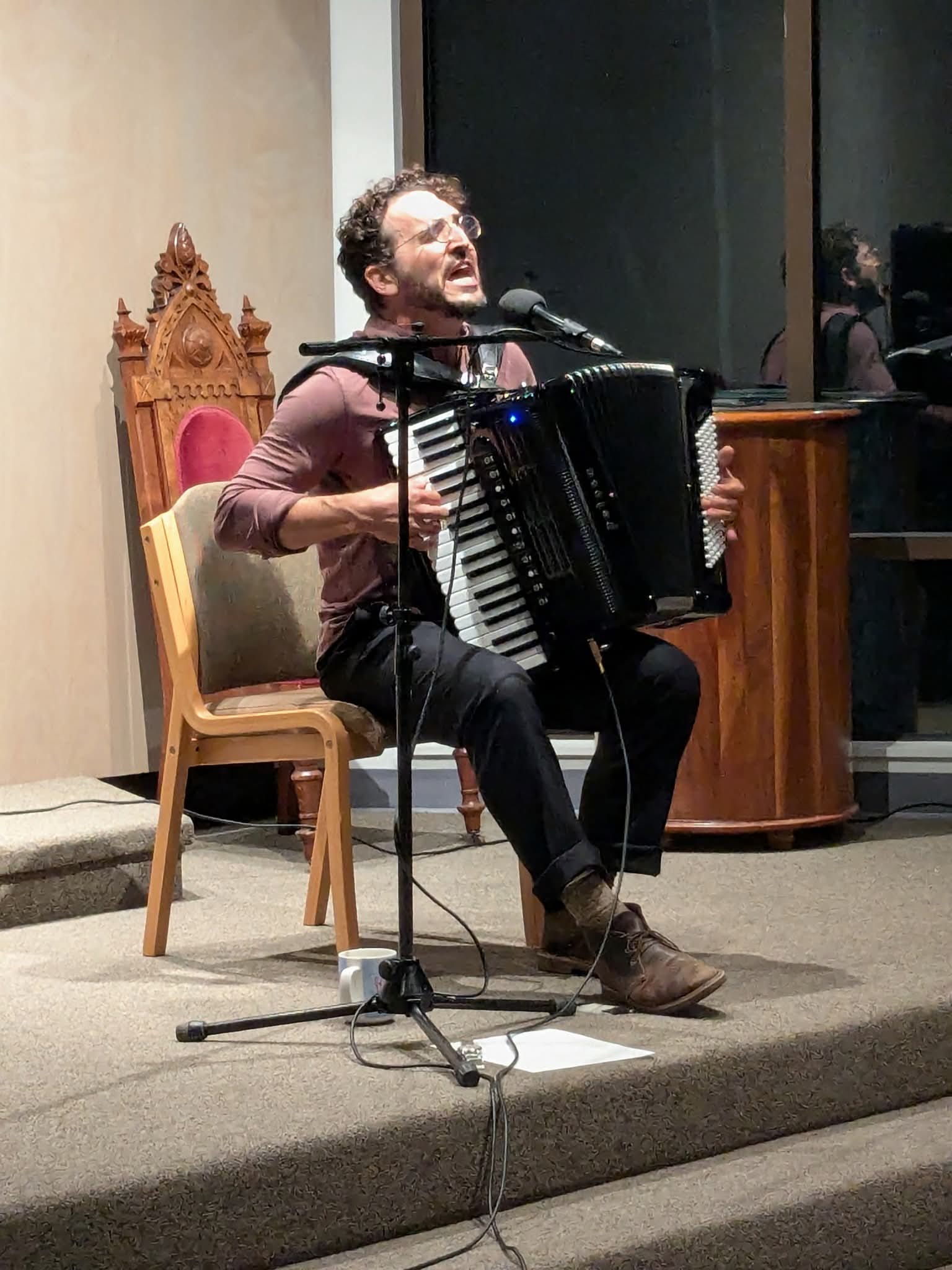
The initiative took an early step forward September 19, when New Mexico-based musician Jordan Wax performed at Congregation Or Ami.
(C) Congregation Or Ami
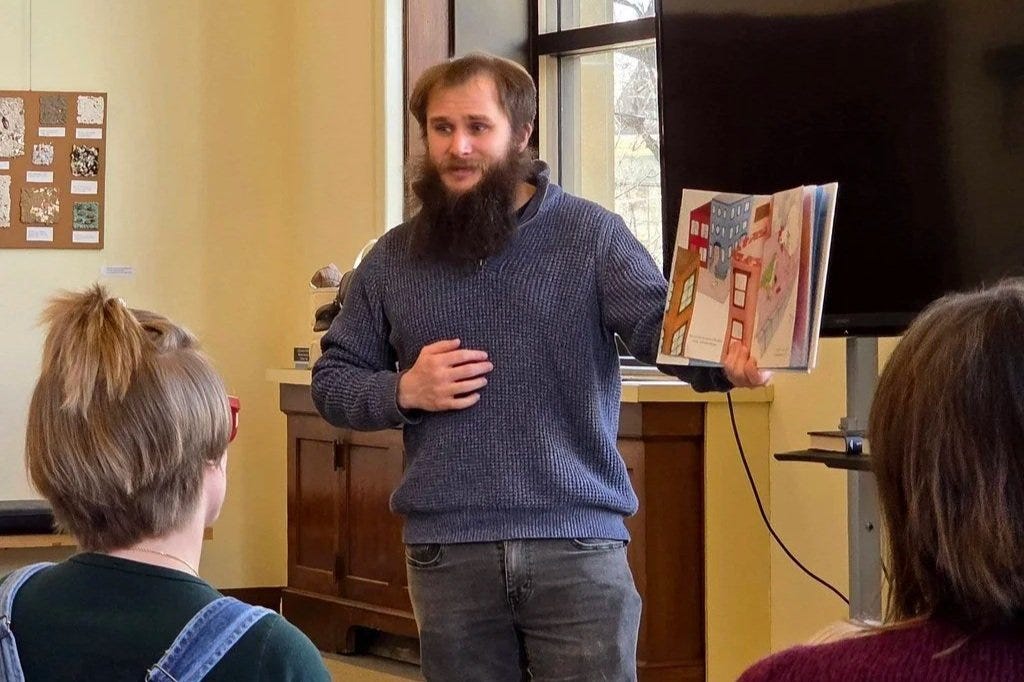
Shokin had encountered Wax at the Yiddish Book Center in Amherst, Massachusetts, where he was performing for children. Impressed by his work, she approached him about bringing his music to Richmond.
Wax’s approximately 90-minute concert incorporated traditional Yiddish songs and contemporary compositions.
“I had a lot of really meaningful conversations,” Wax said afterward, recalling audience members with “profoundly personal connections to Yiddish” alongside others “who were just thinking about it for the first time.”
Those encounters reflect Shokin’s ambitions: creating opportunities for people already connected to Yiddish culture while welcoming those discovering it.
(C) Sam Shokin
Yiddish RVA builds on the festival Shokin founded with Daniel Kraft, whose interest in Yiddish began with literature. They drew inspiration from larger cultural gatherings, including Yiddish New York, KlezKanada and Yiddish Summer Weimar.
A subsequent survey of festival attendees revealed enthusiasm for language instruction and cooking, alongside more concerts.
Other Richmond organizations have offered related opportunities. Kraft was invited independently by the Jewish Community Center to teach Yiddish, while Richmond Public Library has hosted programming through a separate initiative supported by the Yiddish Book Center. Neither effort was organized by Yiddish RVA, but both offer additional ways to engage with the culture.
For Shokin, that engagement is personal.
“I grew up totally secular, but with a very strong sense of Jewish identity,” she explained.
Yiddish culture offered her a way to explore that identity through music, language and artistic expression outside conventional religious institutions. She believes it can offer similar opportunities to people reconnecting with family heritage or discovering unfamiliar aspects of Jewish history.
“Jewish culture is so much more than just bagels,” she said.
Yet Shokin cautions against describing renewed interest in Yiddish as the revival of something that disappeared.
“Yiddish isn’t dead,” she said.
The Holocaust devastated Yiddish-speaking communities across Europe, while assimilation contributed to the language’s decline in many Jewish households. Nevertheless, Yiddish remains a living language in Hasidic communities, and secular cultural movements have continued through literature, theater, education and music.
For Shokin, the opportunity is to connect Richmond with those traditions and the contemporary artists building upon them.
This summer, she attended a two-week Yiddish program in Warsaw, Poland, alongside participants from countries including Sweden, Brazil, France and Australia. The experience reinforced her understanding of Yiddish culture as an international network in which Richmond could become a more active participant.
Wax’s work illustrates the possibilities of that exchange.
Rather than treating traditional Yiddish music as a fixed collection of songs from the past, he describes it as an “inherited creative framework,” encompassing distinctive approaches to performance, phrasing and musical interpretation.
“It’s not a limiting process,” Wax said. “It’s more a springboard for opening up to new creativity because you have this framework that basically enables innovation.”
Wax also sees Yiddish culture as a way to explore Jewish identity beyond contemporary political divisions.
“Yiddish culture is much older than contemporary political Zionism and is much older than the State of Israel,” he said.
Wax emphasized that Yiddish culture is not inherently anti-Israel or anti-Zionist, noting that Zionists also participate in Yiddish cultural traditions. Rather than fitting neatly into contemporary political categories, he argued, the tradition offers access to “a much wider timeframe” of Jewish experience.
“One of the amazing resources of Yiddish is that it connects us to oral history,” Wax said. “There’s so much memory. So much human perspective.”
His own work extends that intergenerational connection to younger audiences.
(C) Borscht Beat
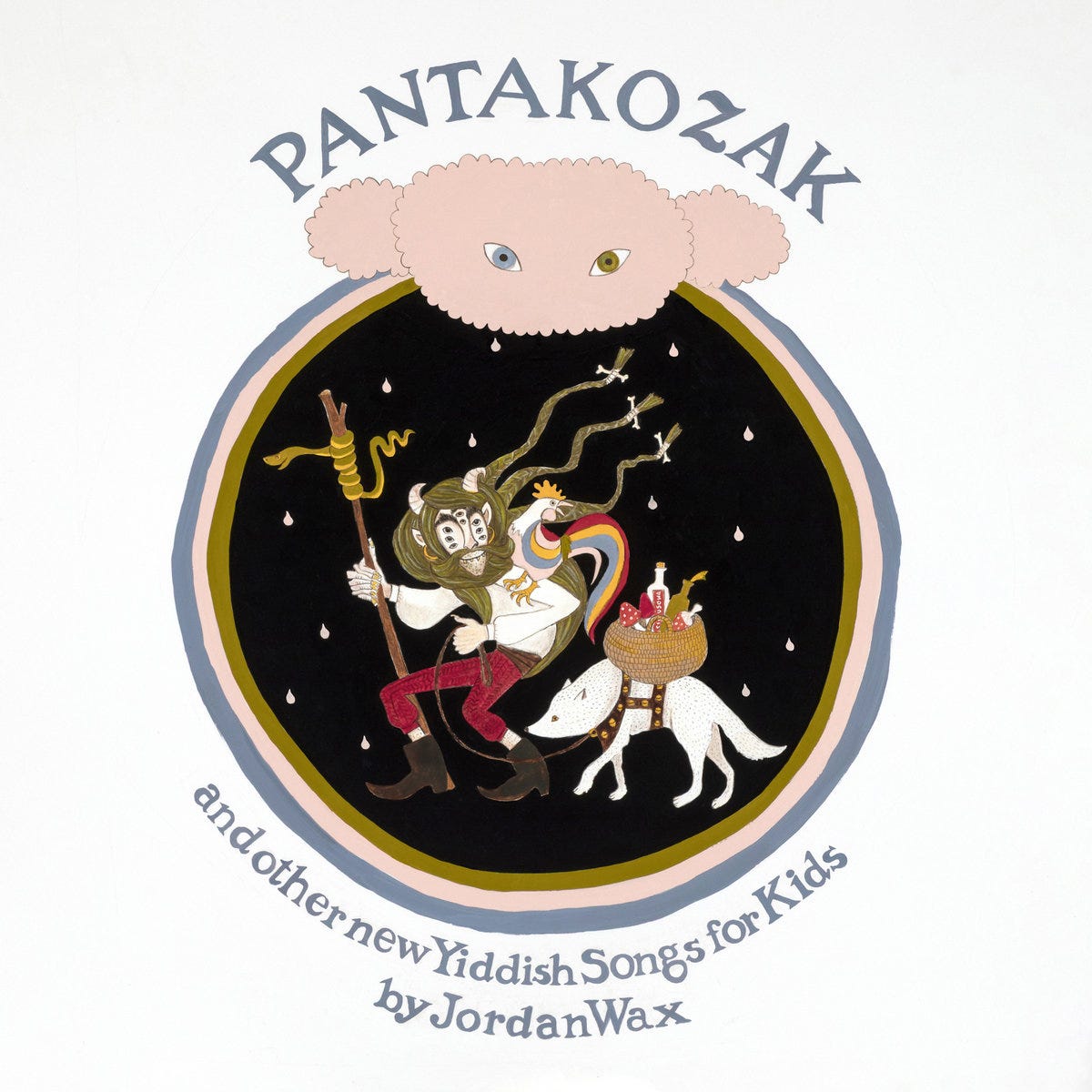
Wax’s 2025 album Pantakozak and Other New Yiddish Songs for Kids draws partly on songs, rhymes and games shared by his late friend Misha Limanovich, a Holocaust survivor and native Yiddish speaker. Wax adapted that material for young children, introducing them to Yiddish through music and play.
“For me, it’s been meaningful to provide an early awareness and connection with Yiddish,” he said, “in a way that I didn’t have as a kid.”
His experience creating Yiddish music in New Mexico also speaks to the possibilities for smaller communities like Richmond, beyond the language’s traditional metropolitan centers.
National organizations are helping expand access as well.
Susan Bronson, president of the Yiddish Book Center, emphasizes that the institution's work reaches beyond its collection of literature.
“It was never just about the books,” she said.
Through its Yiddish Arts and Culture Initiative, the Center provides support and funding for organizations bringing Yiddish cultural programming to their communities. Yiddish RVA is one of 11 organizations participating in this year's cohort, marking Shokin's second year in the program.
The Center also works with the American Library Association on its separate Public Libraries Program, which brings Yiddish literature in English translation to communities across the country. Richmond Public Library was among 38 institutions selected for the program's 2025–26 cohort.
Together, these efforts illustrate how the Yiddish Book Center supports cultural programming through both community organizations and public institutions, creating multiple opportunities for Richmond residents to engage with Yiddish language, literature and the arts.
For Shokin, turning interest into a lasting presence will require more than enthusiasm.
Yiddish RVA depends on fundraising, partnerships and the work involved in organizing events. Shokin raises money through a fiscal sponsor and hopes to collaborate with congregations, the JCC and other local organizations.
She also hopes Richmond Yiddish Week will become an annual festival, although its continuation depends on funding, community support and organizing capacity.
Meanwhile, the Yiddish RVA newsletter is intended to connect residents with programming across the region, whether or not Shokin herself organizes it.
Her ambitions extend beyond individual events. Shokin hopes to make Richmond a regular destination for Yiddish musicians touring the region while encouraging residents to develop cultural programs of their own. One acquaintance has already expressed interest in staging a Yiddish play, an idea she would gladly help promote.
The broader goal is a community in which Yiddish culture is not limited to a single organizer, institution or week on the calendar.
Richmond Yiddish Week demonstrated that people were interested. Yiddish RVA is an effort to give that interest somewhere to go, and to make Richmond a place where artists and audiences can continue finding one another.
For those unsure where to begin, Shokin offers a simple invitation:
“Find whatever aspect of Yiddish culture speaks to them and just ... dive right in.”
Editor's note: This article has been updated to clarify the Yiddish Book Center's support for Yiddish RVA through its Yiddish Arts and Culture Initiative.